International Monetary Fund and International Bank for Reconstruction and Development
Articles of Agreement
Rare Treasury Department Publication
First announcement of the establishment of the International Monetary Fund (IMF) at Bretton
Woods in July 1944 - the greatest, most powerful, and successful international economic
agreement ever made. 44 Allied nations led by the United States and Great Britain sought to
rebuild the international economic system while World War II was still going on. The Bretton
Woods system obligated each country to adopt a monetary policy that maintained the exchange
rate by tying its currency to the U.S. dollar and the ability of the IMF to bridge temporary
imbalances of payments. The formation of the Bretton Woods system is by many considered the
main factor in the economic prosperity experienced in Western Europe and the USA during the
50s and 60s thus shaping the world economy for decades. Even though some of
the basic traits of the system (the gold standard) were abandoned in 1971 - usually referred to as
the Nixon Shock - it is still the most influential economic event in the post war-years, if not the
entire 20th century.
International Monetary Fund and International Bank for Reconstruction and Development
Articles of Agreement
Rare Treasury Department Publication
First announcement of the establishment of the International Monetary Fund (IMF) at Bretton
Woods in July 1944 - the greatest, most powerful, and successful international economic
agreement ever made. 44 Allied nations led by the United States and Great Britain sought to
rebuild the international economic system while World War II was still going on. The Bretton
Woods system obligated each country to adopt a monetary policy that maintained the exchange
rate by tying its currency to the U.S. dollar and the ability of the IMF to bridge temporary
imbalances of payments. The formation of the Bretton Woods system is by many considered the
main factor in the economic prosperity experienced in Western Europe and the USA during the
50s and 60s thus shaping the world economy for decades. Even though some of
the basic traits of the system (the gold standard) were abandoned in 1971 - usually referred to as
the Nixon Shock - it is still the most influential economic event in the post war-years, if not the
entire 20th century.
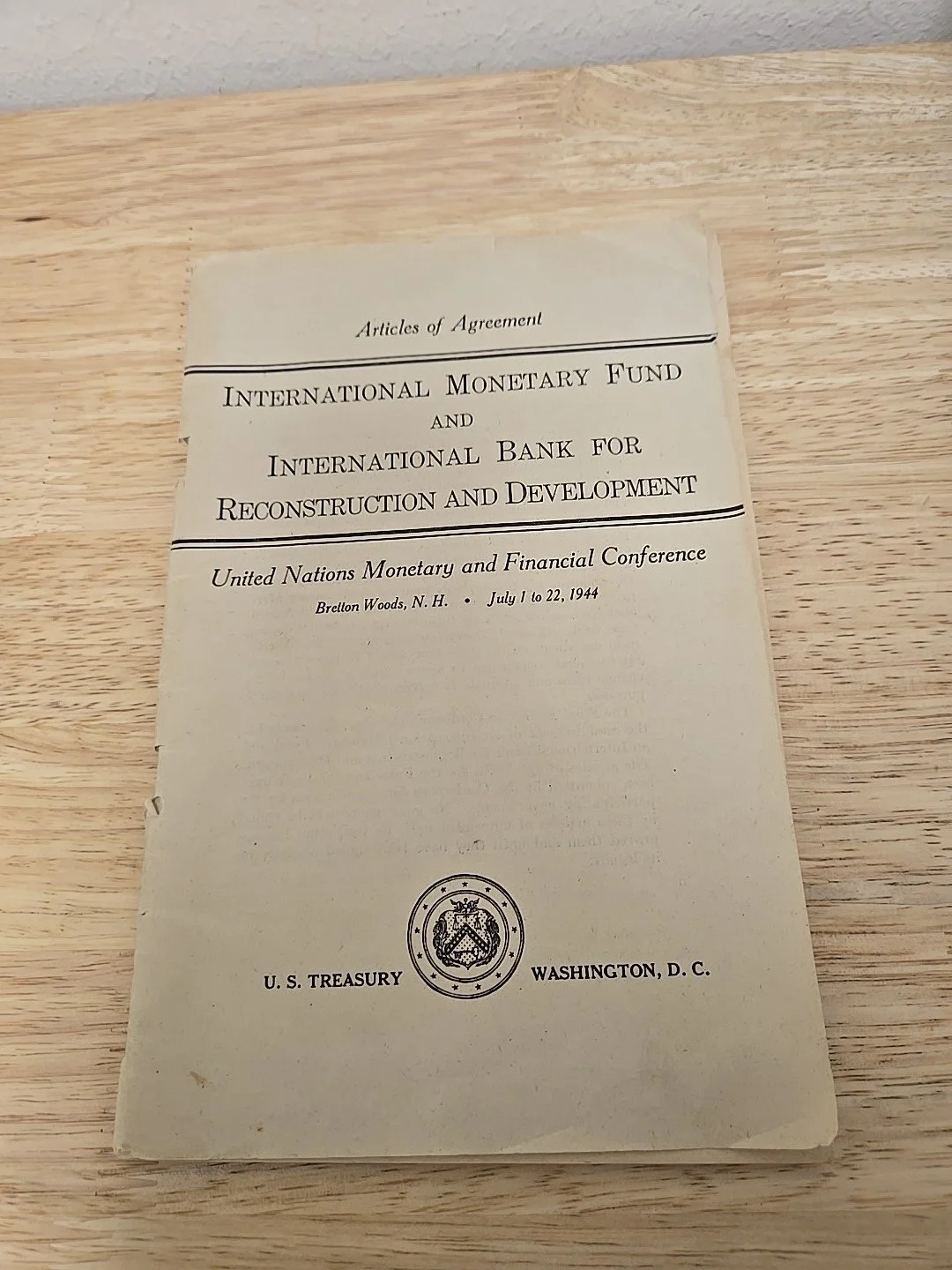 Image 1 of 7
 Image 2 of 7
 Image 3 of 7
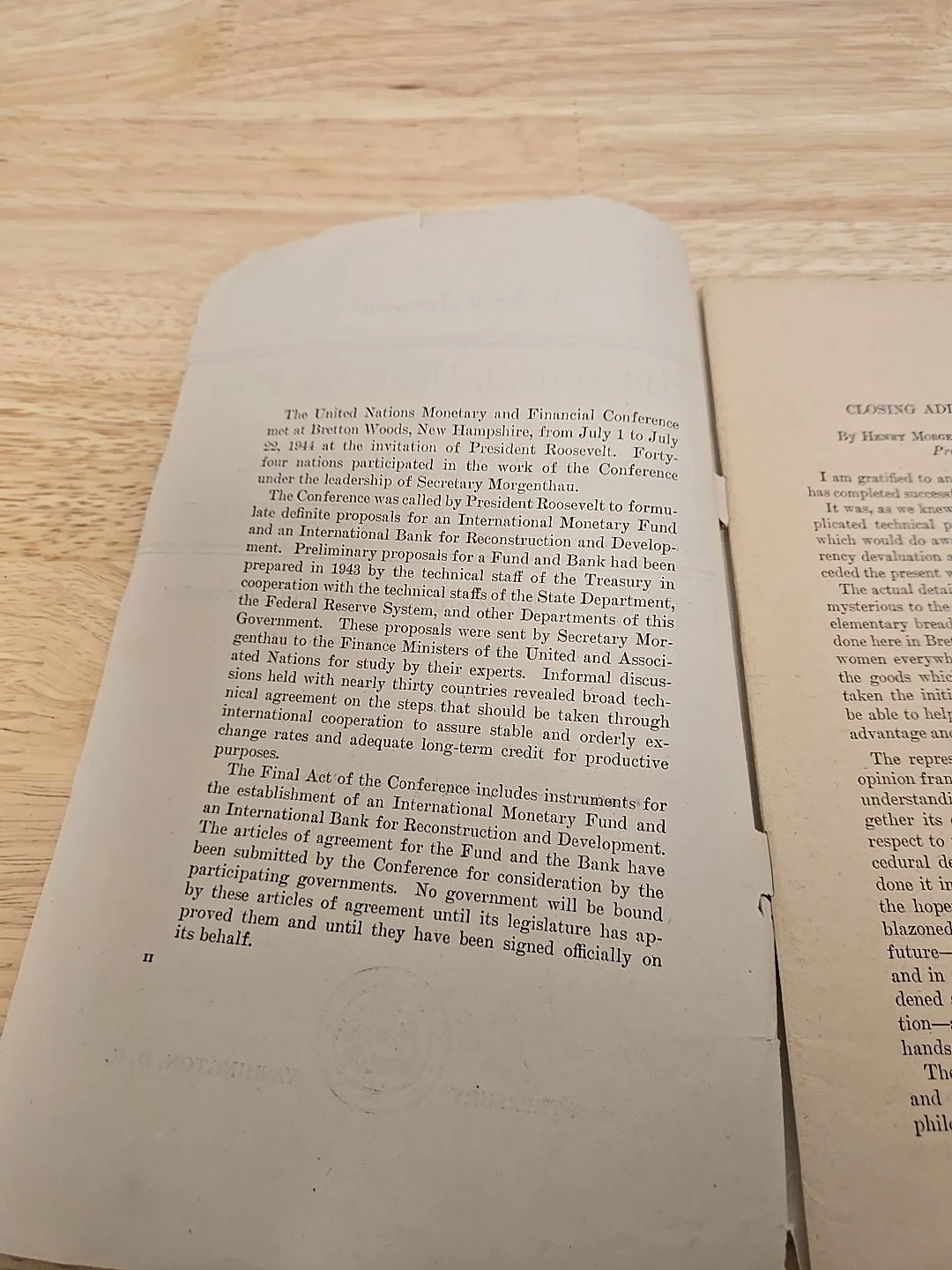 Image 4 of 7
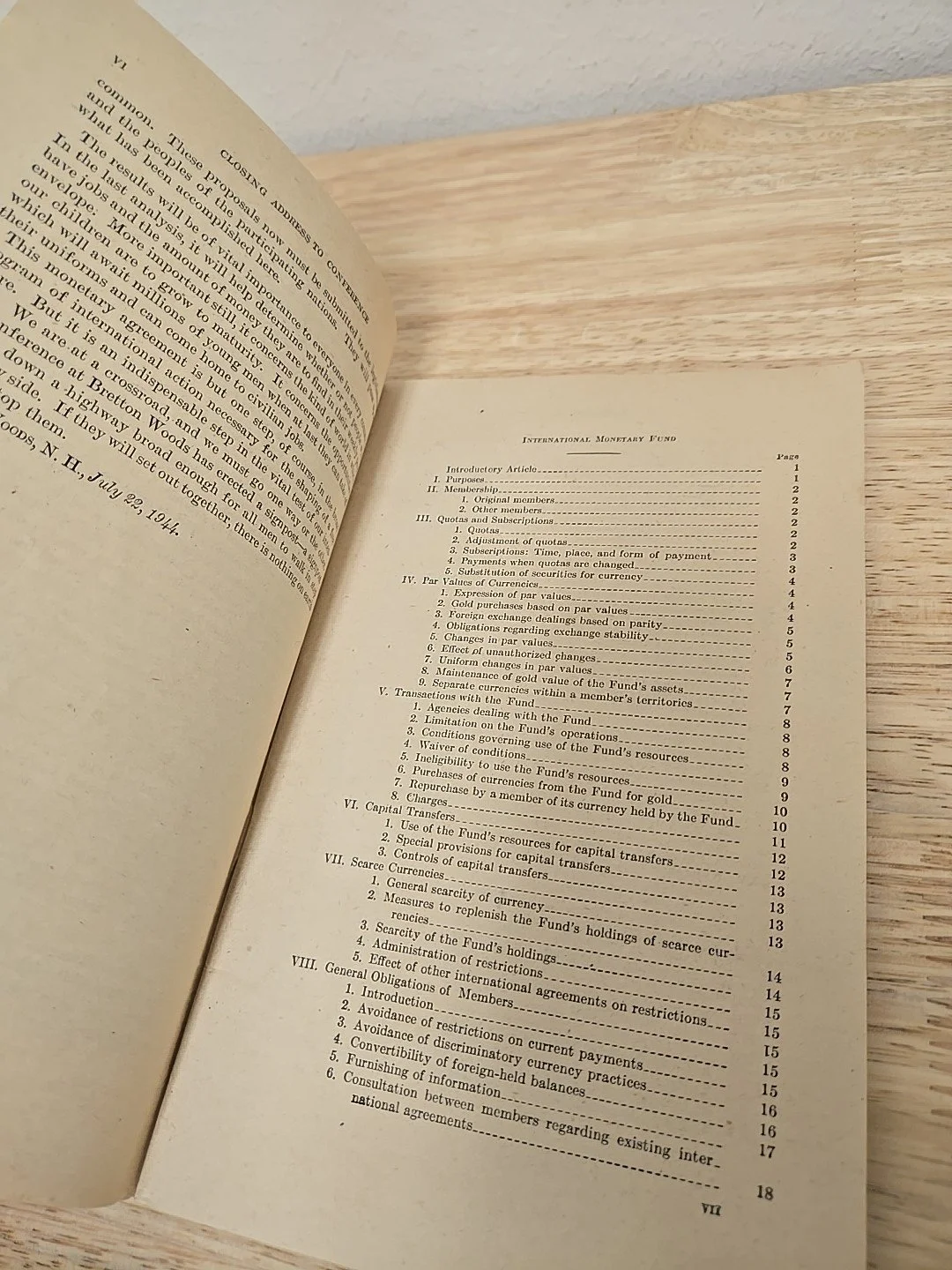 Image 5 of 7
 Image 6 of 7
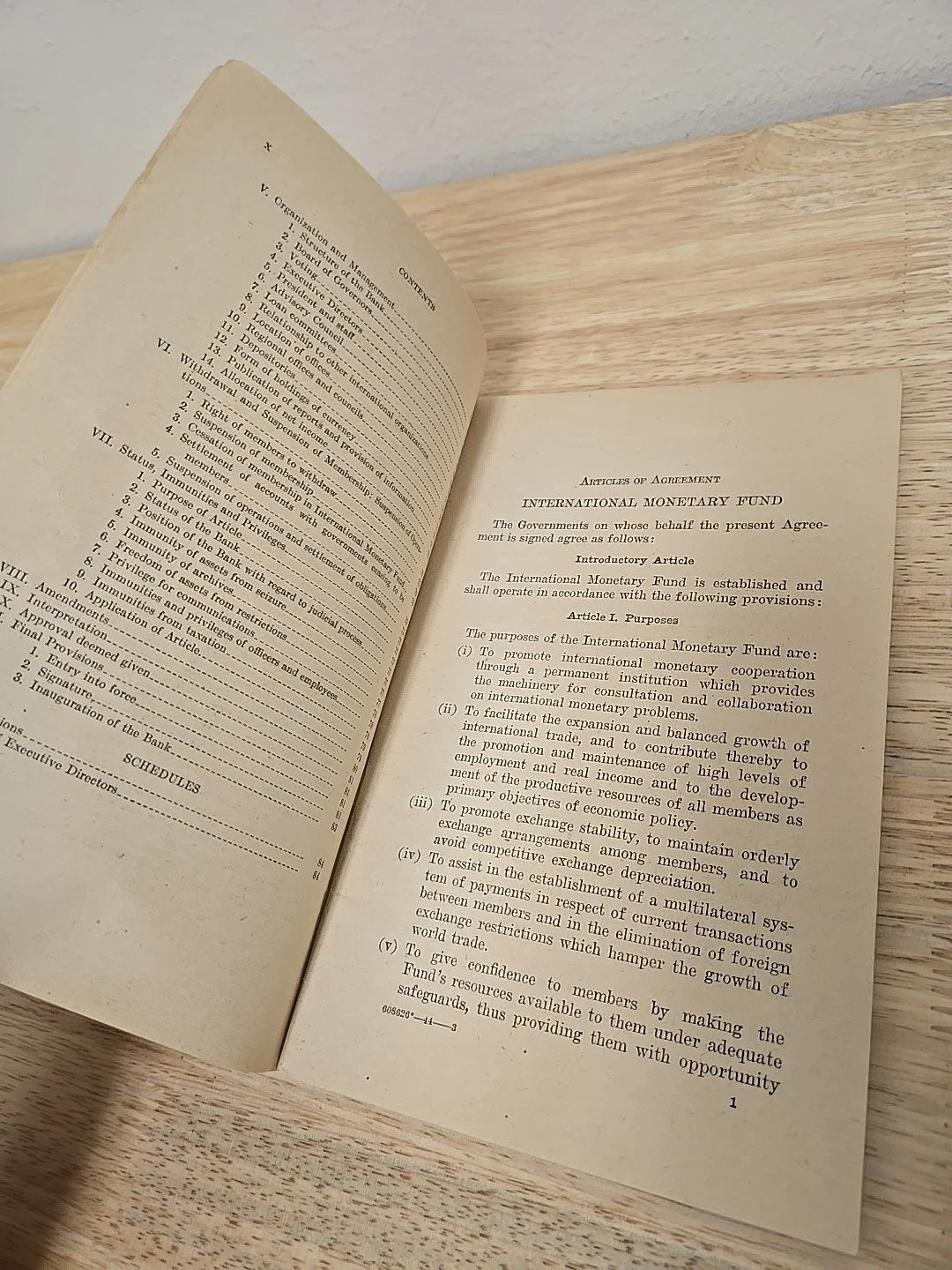 Image 7 of 7