So, you’ve just inherited a collection of old books! What should you do next?
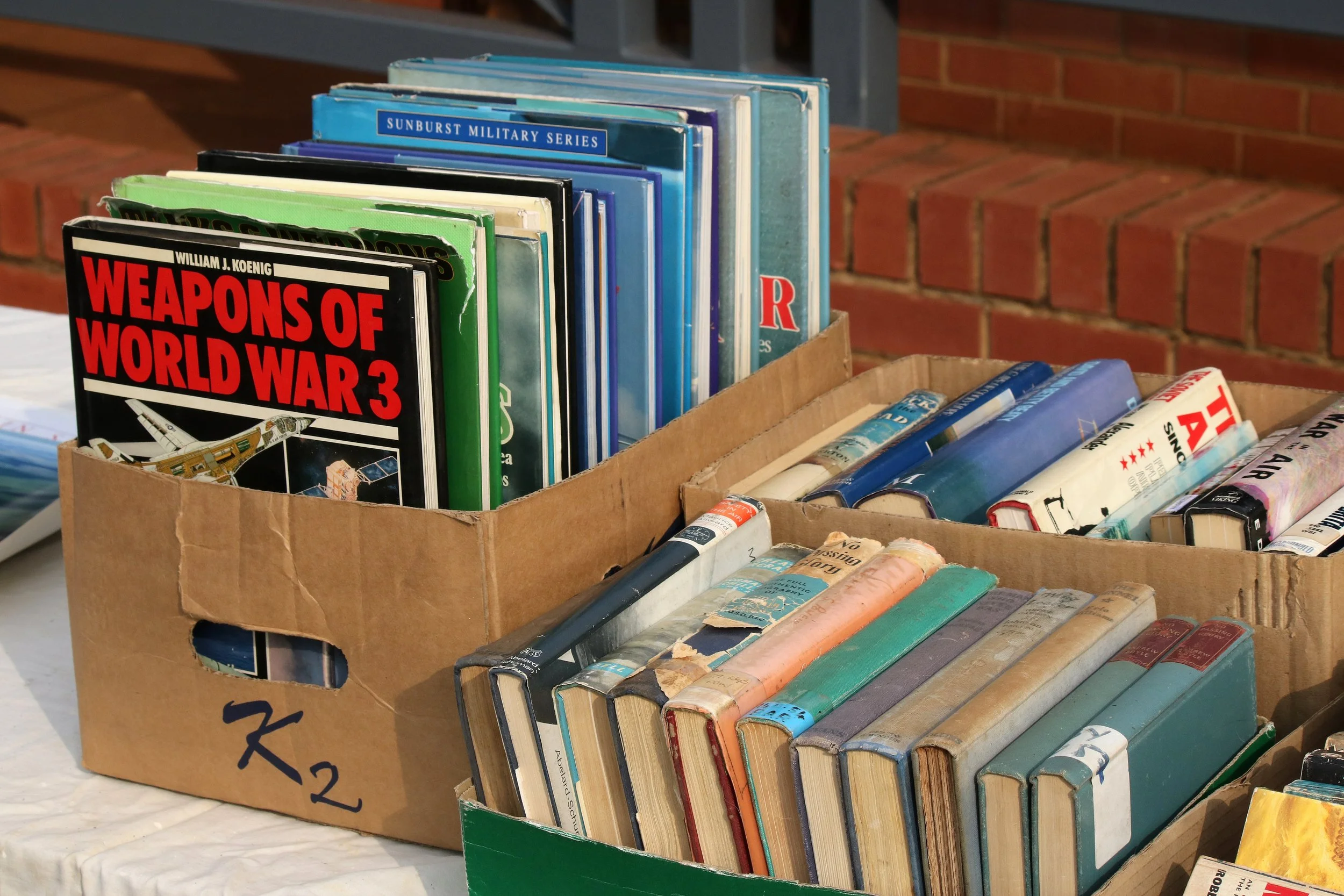
Look through the collection.
Decide what you want to keep.
Chances are, there are some sentimental books in what you have received. Whether it be books about your family history, books read to you as a child (or grandchild), or books you want to give to someone you know, make sure you look through things carefully and decide what you want to keep, before bringing in a third party.
3. Determine what you want to do with the rest.
You’ve looked through the collection, pulled out the things you and others have wanted, now you are left with a bunch of books that you don’t want. If your loved one specified that they wanted the books handled in a certain way, for example, donated to a museum or “Friends of the Library” group, that may be your next step. If not, you need to decide: to keep, to sell, and/or to donate.
4. If you decide to sell…
If you decide to sell, you will need to decide how you want to handle that process. Selling all of the books yourself will likely result in the most money, but if you are handling a large collection of books, that may be a significantly burdensome and time-intensive task. If you decide to go this route, I strongly suggest checking out my Master Resource List, as well as the Facebook Group: Vintage, Rare, and Antique Books.
If you decide to enlist help, you will have a couple of options:
*One important caveat I will add: Appraisals are generally a service that you pay for, while most of the following companies make offers to purchase, or sell your books for you. Asking for a free appraisal is generally considered bad form, but many places may come out to look at the books to make an offer to purchase without a charge. Generally, as they are looking to make a profit, many of these individuals will be looking to get the best deal they are able to, so keep that in mind when negotiating a sale.
Estate Sales Professionals - If you are dealing with an estate, you likely already have enlisted the help of, or plan to enlist the help of estate sales professionals. These folks are great for your generic secondhand books, though you may get a lower price, and they may not have the expertise or clientele to sell higher end, specialty books.
Local Booksellers & Bookstores - Many local used bookstores offer cash and/or store credit for trading in boxes of books. There are also many sellers who utilize eBay and Amazon to sell used books for a profit. You may find an interested party locally who is willing to remove the books for you and pay a small amount. If you choose this option, it is generally helpful to provide a rough estimate of how many books (or boxes/shelves of books) there are, and the topics that are covered (nonfiction, fiction, fantasy, romance, etc.).
Antiquarian/Rare Bookstores - If you are dealing with older or more valuable books, it may be best to contact a bookstore that specializes in antiquarian and/or rare books. There are less of them than general new/used bookstores, so you may have to do a little research to find them. One place to start is associations such as the Antiquarian Booksellers’ Association of America and the Independent Online Booksellers Association have directories to find members in each states, though not all antiquarian/rare booksellers are members of such associations. Additionally, these sellers may require more information about the collection and photographs or descriptions detailing the condition and rarity of the collection. If you happen to be in Idaho, Northern Utah, or Western Wyoming, I would be happy to provide assistance with the valuation or sale of a collection. Feel free to email me at whiteowlrarebooks@gmail.com.
Auction Houses - Particularly for items of extremely high values and/or historical significance, large auction houses such as Heritage Auctions, Sotheby’s, and Christie’s may be a worthwhile option. Generally, the larger auction houses have a floor of $5,000 or $10,000 per item when accepting consignments. Additionally, these often have the largest fees, collecting 15-25% in both a seller’s fee and buyer’s premium (on both ends of the sale).